As his eventing career reached storied proportions, his personal life fell apart, but this eventing living legend is finally becoming the horseman he wants to be.
J. Michael Plumb stares at me intently from his cluttered desk in the tack room of his Southern Pines JMP Farm in North Carolina. “They think I’m a living legend?” he asks with mild surprise. “I don’t think I would call myself that.”
He sits back, and the swivel chair creaks. “What does that even mean?” he asks, turning the interview around.
I pause for just a moment and meet his eye. All I know of this man is second-hand, save for a single eye-opening phone conversation. Any Google search would highlight his unmatched career achievements, but this new accolade spoke to something deeper. It was that one honest phone conversation that made my response come easily: “A living legend is someone worthy to remember, worthy to honor, and yes, Mike, I think that’s you.”
His firsthand account was about to prove it.
An Unparalleled History
J. Michael Plumb is one of the most recognized and accomplished horsemen of the last century. His equestrian career has spanned more than six decades, and his extensive list of achievements prove that, without question, he’s one of the absolute best eventers to date.
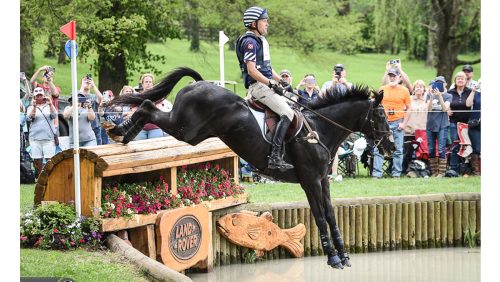
Plumb’s three-day career launched at the Pan American Games in 1959 in Chicago, where he won individual and team silver medals. The next year, at age 20, he appeared in his first Olympic Games. He would be named to every Olympic eventing team between 1960 and 1984, including the alternate 1980 Games in Fontainebleau, France, and he competed in his last Olympics in Barcelona, Spain, in 1992. He is the only U.S. athlete to compete in eight Olympic Games.
During his Olympic competitions he earned three consecutive team silver medals, two team gold and an individual silver. In addition, Plumb won one individual and two team gold medals at the Pan American Games in 1963 and 1967 and was a member of the winning team at the 1974 World Championships (England), also earning the silver medal in the individual competition.
In 1999, the Chronicle named Plumb one of the 50 Most Influential Horsemen of the 20th Century. In 2003, Plumb was inducted into the U.S. Eventing Hall of Fame, and in 2008 he became the first equestrian inducted into the U.S. Olympic Hall of Fame. On 10 different occasions, Plumb was awarded the “Leading Rider of the Year Award” by the U.S. Combined Training Association.
Plumb’s Olympic, World Championship and Pan American Games accomplishments are so numerous you practically need a flow chart to keep track. And yet, with his name firmly etched in the history books, it’s not his past but his present life that proves him worthy of the title “Living Legend.” His is a story of nearly undiluted success, yes. But it’s the dedication, humility and heart-wrenching humanity that make Plumb’s story worth remembering.
A Family Legacy
Plumb grew up the son of well-known horseman and all-around athlete, Charles Plumb Sr. and an equestrienne mother, Mary. His father played semi-pro baseball for a New York farm team and was an accomplished huntsman and steeplechase jockey. In 1929, he won the prestigious Maryland Hunt Cup.
Mike followed in his father’s footsteps, playing football in high school and at the University of Delaware. In 1976, he rode in the Maryland Hunt Cup, placing second. (To this day, he declares it the scariest thing he’s ever done.) But it was his inherited love of horse sports that really stuck—driven, in part, by his parents’ commitment to his training.
Mike’s father was drawn to three-day eventing from foxhunting and steeplechase racing while the sport was still in its infancy. All through the 1960s he competed alongside his son before an accident on the cross-country course at Pebble Beach (Calif.) in 1969 left him paralyzed from the chest down.
Mike credits his father, who was his first coach and trainer, with instilling his formidable drive in him.
After his father, Mike had a long list of trainers, a list that reads like a “who’s who” in the sport, including Jack Le Goff, Michael Page and Jimmy Wofford.
“No equestrian has had the opportunities that I’ve had,” Mike says. “Name a great trainer, and I had them. I have my parents to thank for that. They always managed to have me in the right place at the right time with the right people.”
But it was more than good training that put Mike on eight Olympic teams. “When I first saw him ride as a teenager, he obviously had talent. But even more important, he was a hard worker and very eager to learn,” says William Steinkraus, who participated in five Olympic Games and won individual gold in show jumping in 1968.
Mike married Donnan Sharp, an Olympic dressage rider, in 1964 and had three boys: Charles “Charlie” Plumb Jr., a three-day event rider and coach himself who now lives and trains in Southern Pines, followed by Matthew and Hugh, both of whom are now race car drivers.
“It was a competitive household,” says Charlie with a laugh. “We were always competing: riding, playing football and everything else.” For 12 years, Mike coached his son, much as his father had done for him.
“Dad taught me a lot about the day-to-day routine,” says Charlie, remembering how working with his dad became Charlie’s entire world, learning first-hand his father’s painstaking, hands-on approach. “Dad was relentless about the methodical, everyday things about horses: knowing their legs, their feet and how they looked after every gallop. I don’t know if I will ever be as good as he is at those meticulous things, but I sure learned the importance of them.”
Charlie and Mike have a rocky history, but Charlie’s respect for his father as his one-time coach and as an equestrian runs deep. And perhaps even more poignant is his respect for the man his dad is now working to be.
“The biggest part of what makes Dad a ‘Living Legend’ is obviously all the Olympics and all the medals,” says Charlie. “But what really should be highlighted as well is the character part—that meticulous day-to-day drive to be better at what he does.”
Denis Glaccum, an eventer and the co-director of the Plantation Field Equestrian Events in Unionville, Pa., met Mike in 1960 when they were both trying out for the Rome Olympic team. Two years later they found themselves together at the U.S. Equestrian Team Olympic Training Center in Gladstone, N.J., and they remain close friends. “His whole life is riding,” says Glaccum. “There just aren’t very many people like that.”
When it came to competition, Mike knew what he had to do to get the job done. “At the end of the day it is a results-oriented business. Mike knew that and performed,” says Glaccum.
The Penalty He Paid
ADVERTISEMENT
The dedication that drove Mike’s success and his fame, however, came with a price. From the early ’60s through all eight Olympic Games and for nearly a decade and a half after, Plumb’s drinking became progressively more serious until it nearly destroyed his family, his career and almost his life.
“There was a lot of shit that happened,” says Mike. “Everything I do now is to try to undo some of that. I owe it to those people. I owe it to those horses. There were so many wasted years. I could have done so much more.”
The admission is jarring. “Mike has established all kinds of competitive records, many of them unlikely to ever be equaled or exceeded,” says Steinkraus, whose own record also illuminates an unrivaled career.
But Mike believes there could’ve been more. His regret and disappointment in large part is aimed at the 15 squandered years after the ’92 Barcelona Olympics (Spain) when the drinking came to a peak. He’s open about his struggle against this disease and the clarity that came as he rid himself of it.
Mike’s drinking first got its foothold at Gladstone in those early days, and it became the most powerful force in his life, leading to divorce, innumerable lost opportunities and broken relationships. “I remember one day going out to run,” says Mike as he stares out the window. “I couldn’t run. I was so full of alcohol that I couldn’t even function. But it didn’t occur to me, so I kept going, and the drinking went all through Munich (’72) and then to Montreal (’76) and on.”
Naturally a shy and reclusive man, he felt the pressure of being constantly in the spotlight. “It just kind of took the edge off everything,” he says.
Mike takes the blame without flinching. “A lot of those afternoon training sessions weren’t very good because we’d had too much wine at lunch. But we just kept going because we were young, and it just went through us,” he says. “It ruined a lot. There was a lot of wasted riding.”
His personal life didn’t escape the consequences either. “I was never satisfied with any of my romantic interests,” he says. “I went from one to the next, and I hurt a lot of people. I was just a bad person. An unfair person. And I can only blame it on myself.”
Though lauded for being a team player at the Barcelona Olympics in ’92, where he finished despite a fall and placed second best of the U.S. riders, Mike has only scorn for his riding there. “I am most ashamed of my performance at Barcelona,” he confides. “I had good owners, and there were a lot of nice young kids on the team, but it just wasn’t meant to be.”
Mike’s horse, Adonis, owned by Michael Friedlander, was young and relatively inexperienced. Many people thought he wasn’t a good enough jumper, but Mike insists he’d had some great rides leading up to Barcelona. “This is really an admission,” says Mike, his voice tight at the memory as he reveals the drive for perfection that served him so well in competition and so poorly in his personal life. “But I could have given that horse a better ride. I don’t know if the outcome could have been better. But I know I could have been better.”
Rock Bottom And Redemption
Rock bottom came in 2007. “I tried quitting multiple times. I could function though. I was still riding, although the level was shockingly bad,” he says with a grimace.
But then came a second DUI and some tough love from a close family friend. He went from Olympic hero to losing almost everything, but he’s still incredulous at how lucky he really was. “Why I didn’t have some sort of accident I don’t know. It was just a waste of real talent,” Mike says with disgust. “It was a waste of me; a waste of the horses I rode.”
The willpower to get sober and to start to pick up the pieces slowly became a reality.
“Mike’s competitiveness and stubbornness was actually an inhibitor to getting help for so many years,” says Glaccum.
Some relationships were past the point of mending, but Mike was determined to repair one that had borne the brunt of his destructive behavior. He resolved to show his son, Charlie—who’d seen the disease’s effect more than anyone—that he had changed. Five years later, he says, things between the two are finally starting to get better.
“Our relationship struggled after I went out on my own,” says Charlie. “I guess it probably happens to any child and parent who are that closely bonded in a sport. But then the drinking got bad, and everything else just started falling apart. It is such a terrible disease, and it almost killed him. But he has soldiered on, and all the things that make him who he is have helped him kick this thing.”
And Mike is done dwelling on the past. He’s emerged with a new lease on life and an attitude to match.
“I can’t believe some of the feelings I am having,” he says. ”I don’t know how someone who is as old as I am and has done all those Olympics can enjoy getting up and riding some short legged, unbroken horse for a 10-year-old kid I am trying to teach. I don’t get it. I haven’t had that feeling before.”
With a new-found joy and appreciation for riding and for the horses themselves, Mike can’t help but wonder what he could have accomplished with this mindset a few decades ago. “Don’t you think I could have been even a whole lot better?” he muses.
Mike’s infamous brashness has now given way to a more thoughtful respect and admiration for his mounts. “I was too competitive for such a long time,” he says. “I didn’t think I had time for horsemanship.
“I ride much more thoughtfully now—with perception and awareness,” he continues. “I was such a baby earlier! Apparently I was so good I could get away with it. But now I am much more of a horseman.”
Coming Out The Other Side
Just when Mike overcame the drinking, a hip replacement in 2008 forced him out of the saddle for nearly a year. It was the longest time he could ever remember not riding.
Now he’s back in the show ring, riding Donnybrook’s Dudley Street Station at novice. “I had to pull myself together to do it,” he says.
But although he felt rusty in the tack, his drive to excel was still as strong as ever. “I improved,” he says. “I was always a ducker. George [Morris] used to scream at me about that.”
With Donnybrook’s Dudley Street Station, Mike found himself working hard to prove he still had it. “I was like a little kid, trying so hard. I don’t think most people my age would feel that way,” he says.
ADVERTISEMENT
His weathered face lights up, and he can’t help but smile at the irony. He’s a man lucky enough to do what he loves—and he knows it. And in addition to his riding, he’s finding satisfaction in passing his wealth of knowledge along as a coach.
“I like the one on one—getting to know each individual,” he says. “The best is teaching young people who have no baggage. If you teach them the right way, you can take that little bit of innate fear and turn it into respect.”
His approach is centered on the fundamentals. “I believe in good sound structure,” he says. “And that isn’t something that was put into me when I was young. I had it different.”
Now, he focuses on the importance of the relationship between horse and rider—partly because a meaningful connection was never something he fostered during his career. “I never really gave the horse much consideration. I did a lot of forcing and a lot of rough riding,” he says.
It’s a mistake he won’t let his pupils repeat.
Just as in his riding, Mike closely analyzes his coaching skills to see what needs work. “You can’t teach feeling,” he says. “I do a lot of show and tell on the horse. But I won’t always be able to train like that. I have trouble getting my ideas across. I need to get better at that.
“In my riding, it was always instinctual,” he continues. “I wasn’t a very good listener or teacher. I listen now, though, and I feel like a lot of that teaching is coming back to me.”
The stack of books in his tack room attests to his dedication. The pages are worn and dog-eared and lie within easy reach of the activity coming and going all day long.
He’s Still Got It
Although teaching is his concentration, Mike isn’t quite ready to hang up his spurs. Early in March, he officially came out of retirement, competing at the Southern Pines Horse Trials (N.C.) at the Carolina Horse Park. Though excited about Donnybrook’s Dudley Street Station, competing wasn’t quite as easy as he had remembered.
“I felt pretty rusty at the event. I definitely made some mistakes and was pretty frustrated with myself,” Mike says, shaking his head. He knows that any riding he does now is not just for him, but is also an example that people are watching.
“I feel this need to do justice to the horse, more than anything,” he says. “I am facing up to this whole new standard of values that I ran away from before.”
He laughs as he recalls the excitement of getting his boots shined, trying to fit into his jacket and forcing the buttons on his size 15 shirt. “I guess I wear a 15½ now,” he says.
True to form, Mike won’t accept mediocre. At the spring Longleaf Horse Trials at the Carolina Horse Park, he won first and second in two divisions respectively. “That was a big deal!” he says. “I saved my dressage test. I never would have done that in the old days!”
And while his Olympic days may be over, Mike isn’t done building his legend. He has more to offer, and from his perspective, what he has to offer now is better.
Charlie’s aspirations for his dad are even more challenging, “I would love to see him be more of a leader at the team level,” he says. “I think our team and our sport needs that experience and that wisdom in getting back to the basics. As you know, though, he doesn’t mince words.”
“I’ve thought about coaching at the team level,” admits Mike, “but I think my place is probably at the lower levels—I want to be involved in the everyday aspects. Regardless of talent, I’m putting the absolute best I have into every rider who comes to me.”
Mike’s obsession with horses and horsemen has only grown over the years. “This business means more to me than it ever has before,” he says. “It was just too easy earlier. Now, I know better what I’m doing and why. But I feel like time is getting short, and I have so much more to offer and more to say.”
Mike hopes his journey can be both an inspiration and a lesson. A history filled with team and individual medals may have prompted the label “Living Legend,” but like every good eventer, he’s kicking on toward the future. “I’m 72,” says Mike. “And I want to be perfect; I want to be perfect for them.”
If you enjoyed this article and would like to read more, consider subscribing to the Chronicle. This article appeared in the July 23, 2012 issue, which was the Olympic Preview Issue. Other popular articles published in the magazine in 2012 include…
Simply Put, Kenny Wheeler Knows A Good Horse. Another in our Living Legends series, this story in the Nov. 6, 2012 issue details Kenny Wheeler’s rise from farm boy learning to ride to grand statesman of the hunter ring. His remarkable love story with his wife Sallie is an integral part of the tale.
“He’s set the standard for hunters as far as quality, looks, movement, jumping style and technique,” said hunter trainer Tommy Serio, who spent six years riding for Wheeler. “He’s given hunters what we look for today. He was ahead of his time as far as quality and class are concerned.”
But for Wheeler, it’s not all about the trophies and ribbons. He simply likes the process of training horses. There’s nowhere he’d rather be than standing in his ring with a young horse learning to jump in front of him. “I love to watch colts and train young horses and bring them up. A lot of people like to buy them ready to show, but I like to make them,” he said. “That’s really why I’m doing it. I like to watch them learn here at home, and then go to the show and see them progress.”
Wheeler’s fame may have come in the ring at horse shows, but the real story of his life centers around his horses, his family, his one true love, and a farm.”
German Precision Prevails Again. Sara Lieser’s coverage of the 2012 London Olympic Games eventing competition appeared in the Aug. 13, 2012 issue and delved into the underlying reasons behind Germany’s domination.
“National eventing coach Chris Bartle said Germany’s focus on team unity all year long is one of the elements behind their frequent gold medals, including the 2008 Olympic Games and the 2006 FEI World Equestrian Games. “Our squad of riders [in Germany] isn’t that big. The squad is about 20-25 strong,” Bartle said. “It enables us all to have quite good contact with each other throughout the season. I think there’s always a very good team spirit. I’m not just talking about [the Olympic team], but I’m talking about the bigger team of 20-25 riders who all have a chance of playing on the day, just like a football team that’s made up of more than 11 players. By focusing first on all of the team—’All for one and one for all’ is our motto—it gives extra strength to the individuals.”