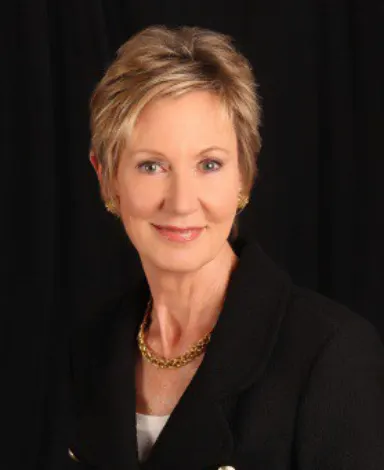
On Aug. 31, the U.S. Equestrian Federation announced the organization’s new president: Chrystine Jones Tauber. She’ll begin her four-year term in January of 2013. Current president David O’Connor has served as the USEF president since 2004.
Tauber hit headlines for the first time in 1965 when she won both the AHSA Medal and ASPCA Maclay finals. Throughout her career she’s worn many hats as a judge, course designer, trainer and director of show jumping activities for the U.S. Equestrian Team. Tauber, 65, has been involved in governance for more than 35 years. She currently serves as the vice president of the U.S. Hunter Jumper Association and secretary of the U.S. Equestrian Federation.
“Our core values must involve what we stand for, how we conduct our business and how we treat each other,” said Tauber of her vision for the USEF. “In the end we’re all working together to create an image of excellence.”We caught up with Tauber to hear more about her thoughts on governance, horse sport today, and the Federation’s most pressing challenges.
What is your history in the horse world?
When I was younger, I rode internationally, representing the country in the late 1960s. I went on to work for the U.S. Equestrian Team starting in 1981. While I was there I managed two Olympic teams, two Pan American Teams and two World Championship teams.
I got involved with governance starting in the mid-1970s through committee work, and I’ve served on many committees like the licensed officials, hunt seat equitation, planning and the board of directors. I also served as the executive director of the American Horse Shows Association for three years. Through my work at the AHSA working with different breeds and disciplines, I came to have a great appreciation of all of them and what they do.
While I was working for the U.S. Equestrian Team, I served as the director of show jumping activities. That meant when we went to Games, I did what Jim Wolf does now and was the team manager for all three disciplines.
I was involved from the very start with the USHJA, and I’ve served on many committees there, and I currently serve as the vice president of the organization.
I’ve also been a USEF judge, judging hunters, hunter seat equitation and jumpers, and I’ve judged all the major equitation finals, most recently judging USEF Medal Finals last year. I’ve also judged the IHSA Finals and the NCAA Finals twice. I really enjoy the collegiate riders.
I’m also an FEI judge and an FEI- and USEF-licensed course designer. This has given me many different perspectives within the industry, and I’ve had a great deal of exposure to many sides of it and appreciation for what goes into our sport to keep it vital and running.
Why did you want to be president of the USEF?
I love horse sport. I really enjoy being a part of the process that helps us evolve and move forward. I really like being able to work on projects and contribute to the direction in which our sport goes.
ADVERTISEMENT
Is it a paid position?
The president is paid for days that you’re on the road or working on behalf of the Federation, and there’s a cap on that. It’s sort of like judging in that way.
One of the things the Nominating Committee said is: “The job description says it’s 100 days a year. Do you have that?” I was able to answer that I have whatever time you need. I will make the time.
When did you decide this was something you wanted to do?
I almost feel like I’ve been groomed for this all my life. It came very naturally to me with my background and bank of knowledge. I feel really ready to step into this position. I’ve had a great deal of encouragement from people in other breeds and disciplines, which I think is really positive. A big part of the president’s job is about balancing all those breeds and disciplines.
What do you see as the most pressing challenges?
I feel strongly about having a five-year strategic plan where you can define goals and lay out a strategy. Then you get everyone thinking along the same lines and on the same track. It’s important to have the affiliates understand where we’re headed and why. I want to see us update that plan because it’s expired.
There’s been a lot of talk in governance about restructuring. What it boils down to is this: Whether you want to restructure to make the board smaller or the working groups more effective, in the end it’s all about communication. What’s important is how we communicate with our boards and our members.
We have to be careful to stay in line with our mission. We are the national governing body of our sport. We’ll continue to do core service programs—things like regulations, licensing of officials and competitions, drugs and medications and the hearing process—and do them well.
We’re moving into a phase that’s all about technology, which changes what we can do. That also spills into marketing, of course. USEF Network is very exciting and has all sorts of possibilities. We have an opportunity to increase visibility for our sport and elevate it to another level and bring in more sponsorship. We can also increase better visibility for our sport. Equestrian sport has always been tough to get on TV, but we can do some really interesting things with USEF Network.
I’m also excited to be an information technology hub. We’re starting to help the U.S. Pony Club and the American Saddlebred Horse Association with their IT services. This is going to make us all communicate better, more efficiently and more effectively. I’d like to see more revenue generation centers where we can make money to put in our programs. Down the road IT services or maybe even drugs and medications are services we can offer to other organizations. We have to look for other revenue generation centers besides competition dues.
We’ve been working with a company called Echo on a program that will begin in 2013: The Mirror. Individual members can go on the web and customize your own USEF web page. I believe you will be able to drag and drop things that are of interest to you on it. We’re looking at doing webinars and other ways to use technology to be more interactive. That’s exciting for the future. Yes, we are in governance, and we have to do that and do it well, but we are on the brink of being able to utilize digital strategies to improve communications and expand our outreach.
ADVERTISEMENT
How do you see the USEF addressing slipping high performance results? How big a role does high performance play in the USEF mission?
We are the national governing body for horse sport, and high performance is an important factor in terms of what we do. When the Olympics roll around, all eyes are watching, and it’s our opportunity to push forward the concept of equestrianism in the wider world as well. It’s important to find balance between the national and international sides. We need to come up with various sources of revenue and look for programs that can be self-sufficient.
After this Olympics in London, we’re putting together a blue-ribbon panel of riders and coaches to look at every single aspect of our preparation, programs and performance to see how we can do it better in the future. It’s the first time we haven’t medaled in something like 50 years. It’s a big portion of our mission to produce these teams, while creating balance with the national side of the sport.
How hard will it be to fill David O’Connor’s shoes?
He’s certainly left me big shoes to fill! He’s also built the organization up from a chaotic transitional period and left us financially strong with a very strong structure. There are things in the pipeline that will need to be brought to fruition. It’ll be different because it’s a different time period now. He’s developed the USEF model, but now we’re in a stage for renewal where we can solidify what we do and go forward with new initiatives.
What’s the process to become USEF president?
It’s been going on for six months. Historically, for a long time we didn’t have a vice president of the Federation, and for years the secretary was sort of the heir apparent, unless he didn’t want the job. Over the years, some elections were more hotly contested than others, and eventually the board decided we should do something more transparent.
The bylaws were rewritten to create a process in which people could be nominated or could nominate themselves, and nominations opened in February and were open until June. Three candidates submitted quite a bit of paperwork, including a CV, a statement as to why you want to be president, and your vision. We each had an in-person meeting with the nominating committee, and they had a meeting after that to select a nominee, and I was selected. We’d scheduled a forum to meet the candidates on Monday before the Tuesday midyear-Board of Directors meeting. The two other candidates indicated that since the nominating committee had made a recommendation, they’d like to get behind the nominating committee and my nomination.
Initially, we were going to cancel the candidate’s forum, but I suggested an informal meeting with the board members who were there. I had David and [CEO] John Long sit up there with me. To my knowledge, I don’t know that the board has ever been able to sit down and talk without pressing agenda items on the schedule. They could ask any questions and talk about issues. I made a few remarks to open the meeting, and it led to some productive dialogue. Then the election was the next day.
Do you have a farm where you currently train or ride now?
Four years ago we moved permanently to Wellington, Fla. Prior to that I spent 27 years in New Jersey where I did a lot of training and some showing. I’d always done it on a freelance basis as an independent trainer. When I moved here I thought I’d retire. But it turns out I kept going anyway! I’ve been freelance teaching people in an equestrian community with a horse park called Caloosa for several years.
What about your family?
My husband George and I live in Wellington, and we have lots of family on both sides and grandkids. A lot of people ask: What does your husband think of all this? Believe it or not, he’s my biggest fan and supporter, and he’s even taken over the cooking! We have two pets that live with us: Willow, a Norfolk Terrier, and Minky, a tortie-colored cat.